SBCC Summit Panamá: Who Is the Measurement For?
Strategy
We measure the wrong things because we measure for the wrong people.
A woman in the comments beneath one of our films wrote that she had just declined the HPV vaccine for her nine-year-old daughter at a check-up. Then she added a second line: let me go and reschedule.
In most campaign reports, that moment would be filed under "engagement," counted once as a comment, and forgotten. It was, in fact, the only thing that mattered. And the gap between those two facts, that the single most important moment in a campaign is the one our systems are least equipped to see, is not an accident. It is a design choice, and versions of it run through the whole of African development.
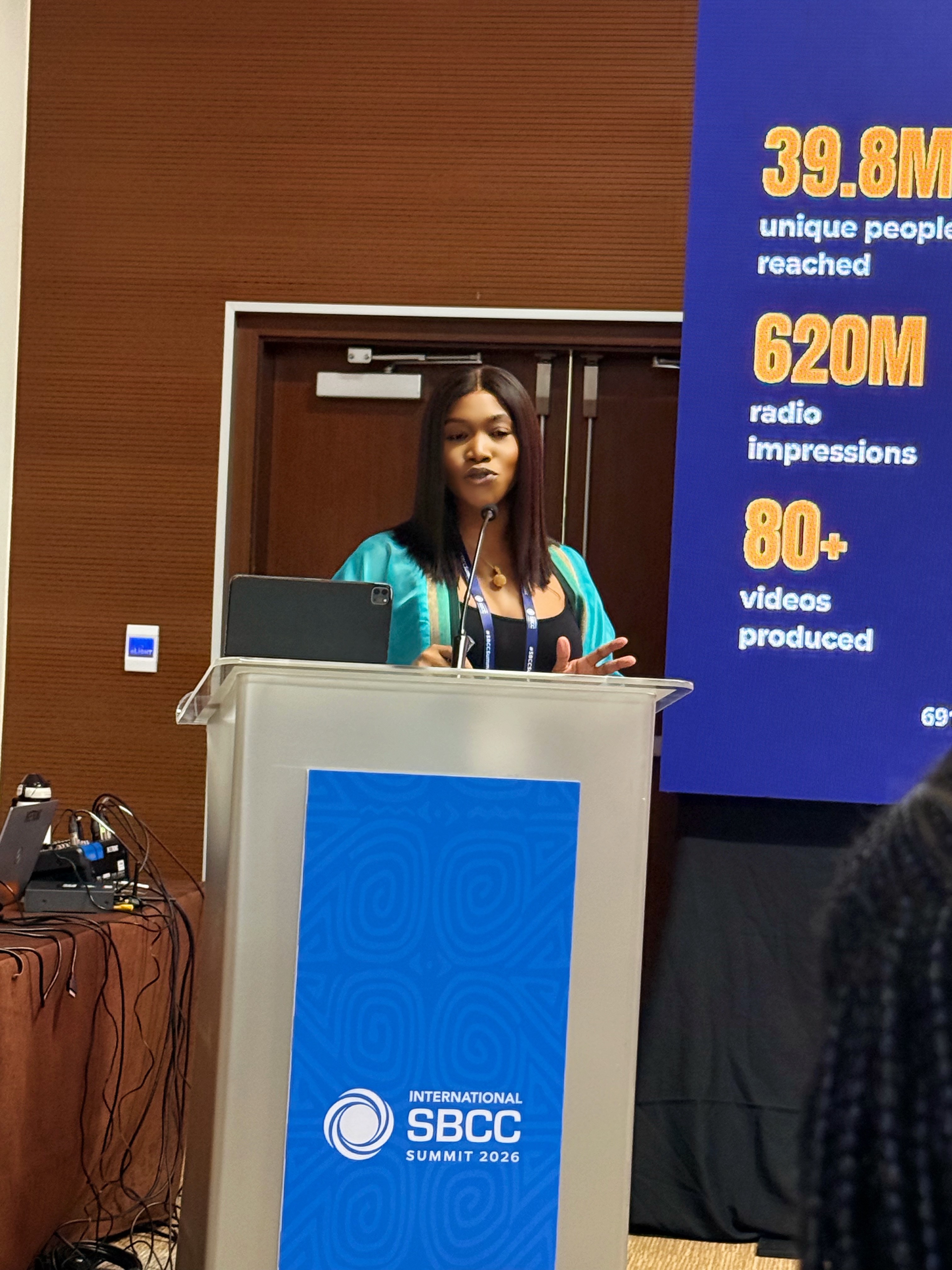
I have just returned from the SBCC Summit in Panama, the global gathering of people who work in social and behaviour change communication, where I attended as part of the Gates Foundation's Summit Partner Delegation. I led two presentations and joined a panel on trust. Across the week, one conviction hardened, and it is less comfortable than the usual call for better data.
We measure the wrong things because we measure for the wrong people.
Reach, impressions, views, applause. We reach for these numbers because they are large, quick, and easy to celebrate, but also because they are legible to the people who fund the work. A reach figure travels neatly into a report and reassures a board in another city. Whether a mother actually rescheduled her daughter's appointment is slow, small, hard to aggregate, and it points outward to a community rather than upward to a donor. Measurement follows money. In this sector, money flows down from funders and accountability flows back up to them, and the audience, the supposed point of the entire exercise, sits outside that loop. We are diligent about proving we were seen, because being seen is what gets renewed.
This matters more now than it did a year ago. The disruption to development financing has put every dollar under harder scrutiny, and the reflex, when money contracts, is to prove value faster and louder, to double down on the very metrics that flatter. But the disruption is also an opening. If the old funding settlement is breaking, so is the accountability that came with it. This is the moment to ask who our measurement should actually answer to.
Let me show what changes when you ask that honestly.
With our StopHPVForHer campaign on cervical cancer prevention, we assumed the barrier was awareness. Explain the link between HPV and cervical cancer, and people would act. After the campaign, our measurement partners surveyed Lagos and compared those who recalled the work with those who did not. The people who recalled it were far more likely to know where to get vaccinated, sixty-four per cent against thirty-six. They were more aware of HPV, and likelier to intend to vaccinate.
But one number barely moved. General support for vaccines sat at ninety-two per cent among those who recalled the campaign and ninety-one among those who did not. Almost identical. At first that reads as failure. It is the opposite. Support was already high; belief was never the barrier. What people lacked was navigation, the practical next step of where to go and what to do. We did not change whether people believed in vaccines. We changed what they could act on. Had we measured only the funder-friendly figures, reach and awareness and applause, we would have missed the real story completely, and reported a success that misunderstood its own cause.
I want to be careful here, because care is part of the argument. This is a recall-based comparison, not a controlled trial. It shows movement among the people the campaign reached, not proof that the campaign alone produced it. The World Bank has a study on the campaign underway, and I am waiting to see what it finds. Rigour means naming the limits of your own evidence, not only the parts that flatter you, and a sector serious about accountability would make that candour the norm rather than the exception.
There is a deeper point buried in that survey. Audiences are not passive recipients of a message. They are active participants, and if you are listening, they will tell you what you got wrong.
We named the campaign StopHPVForHer. The comments kept returning to one question: what about the boys? HPV is not only a women's issue, and our frame had been narrower than the problem. That was not a complaint to be managed. It was the audience correcting our thinking in public. A metric pointed outward, at the community, catches a signal like that. A metric pointed upward, at a funder, never will. The direction your measurement faces decides what you are able to learn.
This is why I have come to believe the future of this work is less about broadcasting messages and more about listening through them. And listening, done properly, is not a soft skill. It is a redistribution of authority. It treats the audience as the party you answer to. In practice it means asking concrete questions: what does this audience actually watch, which platforms do they already enjoy rather than the ones we wish they used, which voices do they genuinely trust and do those voices have an authentic tie to the cause or are we merely renting reach, and in which languages do they need to hear us. For StopHPVForHer that meant a film in Yoruba and a film in English. For a separate campaign on women's economic power, it meant jingles in Hausa, Igbo and Yoruba. Each of those choices costs money a funder-facing metric would not obviously reward. Each of them is where the work actually happened.
So the measurement question is never only technical. It encodes who a campaign is really for. Building measurement from the first day is not a methodological upgrade, it is a decision about accountability, about whether the community or the cheque comes first. In a moment when the money is shrinking, that is not a luxury we can defer. It may be the only honest basis left for the work.
That woman who rescheduled her daughter's appointment was worth more than a million impressions. The real question, for all of us in this sector, is whether we will build the kind of accountability that can hear her.
Mary Edoro
Strategy · Leadership · Growth
© 2026
